
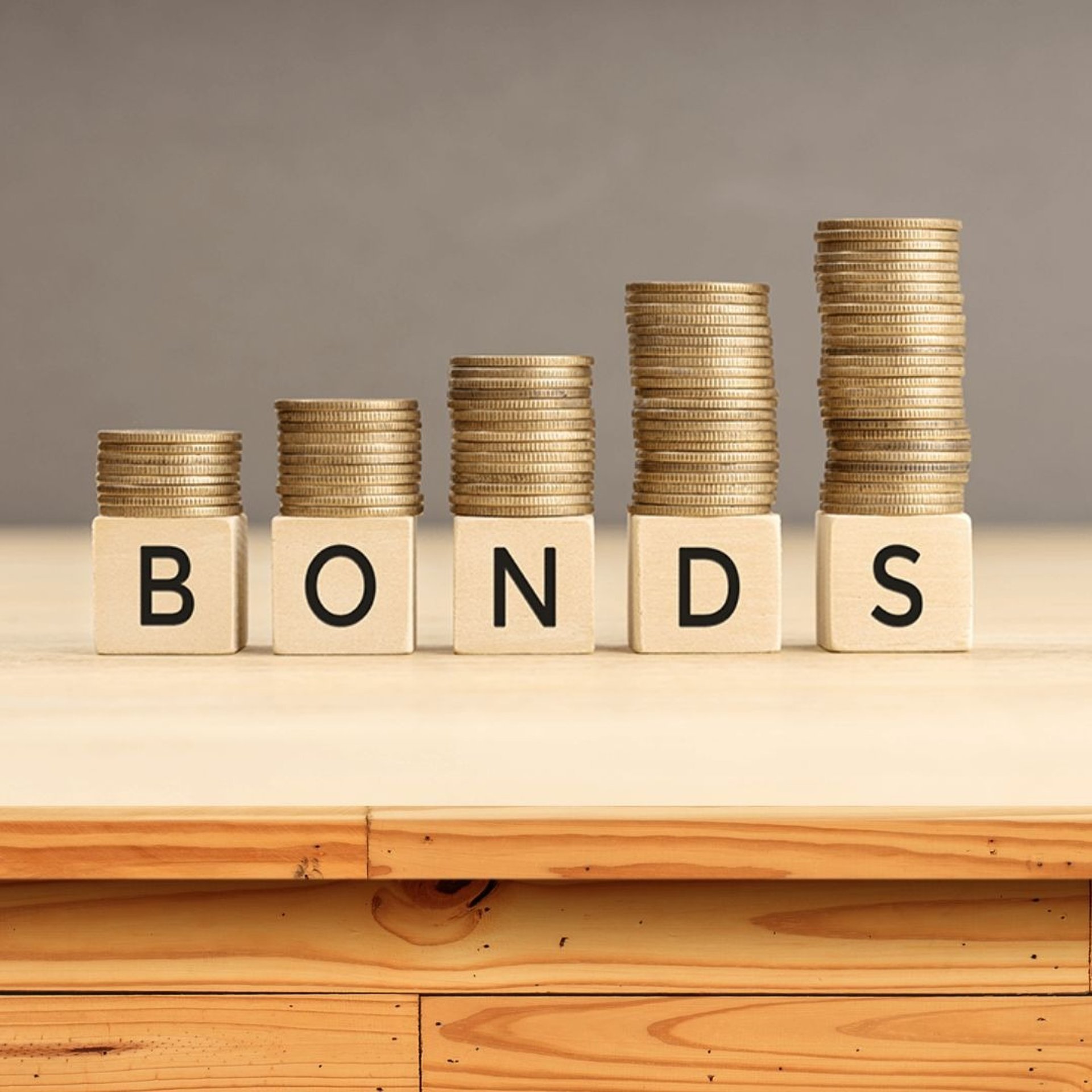
BONDS
What Are Bonds — Basic Idea & Benefits
What is a bond?
A bond is a debt instrument. When you buy a bond, you lend money to the issuer (a company or government), and in return they pay you interest (typically regularly) and repay the principal at maturity.
Bonds come in various forms: government bonds, corporate bonds, tax-free bonds, zero-coupon bonds, capital-gain bonds (like under Section 54EC),
Benefits of bonds:
Steady income: Bonds pay periodic interest (coupon), which offers a regular income stream — typically more stable and predictable than equities.
Lower volatility: Compared to stocks, bonds are generally less volatile (especially government or high-grade corporate bonds). Suitable for investors wanting stability or lower risk.
Diverse investment option: Bonds can help diversify a portfolio, balancing risk from more aggressive investments (like stocks).
Tax-saving / tax-efficient variants: Some bonds (e.g. “tax-free bonds,” or capital-gain bonds under Section 54EC) offer benefits such as interest exemption or capital-gain exemption under certain conditions.
Liquidity (for listed bonds): If the bond is listed on a stock exchange, you may be able to sell it before maturity — giving flexibility to exit, though liquidity may be lower than equities.
So for conservative or moderately risk-averse investors, bonds offer a middle path — better return than a savings bank deposit (sometimes), but usually lower risk than equities.
Taxation on Bonds in India — As per Current (2025/26) Rules (applies to FY 2026-2027)
How bonds are taxed depends on two things:
What you receive — interest or capital gain
What kind of bond it is (listed/unlisted, tax-free, zero-coupon, etc.) and how long you hold it.
✅ Interest Income from Bonds
For most regular taxable bonds (government or corporate), interest income is taxed as “Income from Other Sources” and added to your total taxable income. It is taxed at your applicable income tax slab rate.
For some bonds that are explicitly issued as tax-free bonds (often government/PSU bonds), the interest may be exempt from tax under certain sections of the law.
Implication: If you are in a higher tax slab, interest income from bonds may lose some of its attractiveness (post-tax return will drop).
✅ Capital Gains / Sale / Redemption of Bonds
If you sell a bond before maturity — or trade it in secondary market — the profit (difference between sell price and purchase price) may attract capital gains tax. The tax depends on whether the bond is listed/unlisted, and (in earlier rules) how long you held it. However, recent changes have altered things for unlisted bonds.
Here’s how it works now:
Type of Bond / ScenarioHow Gain Is TaxedListed bonds (sold/redem > 12 months)Long-Term Capital Gain (LTCG): taxed at 12.5% (plus cess). Listed bonds (sold/redem ≤ 12 months)Short-Term Capital Gain (STCG): taxed at your income tax slab rate.Unlisted bonds (after recent change)All gains — even if held long — treated as STCG: taxed as per your slab rate. Zero-Coupon bonds (no periodic interest)The difference between discounted purchase price and redemption value is taxed as capital gain. If listed and held > 12 months → 12.5% LTCG; else STCG at slab rate. If unlisted → treated as STCG anyway. Tax-free bondsInterest may be exempt; but any gains from selling before maturity are taxable. Gains taxed based on holding period and listing status (as above).
Important update (as of 23 July 2024 / FY 2025-26 onward): For unlisted bonds redeemed or transferred on or after 23 July 2024, all gains are treated as short-term (STCG) and taxed as per your normal slab rate, regardless of holding period.
⚠️ What to Remember — Risks & Real-World Impacts
If you hold bonds for the long term, tax efficiency depends heavily on bond type (listed vs unlisted). Unlisted bonds no longer get long-term capital gains benefit.
High-tax slab investors may find the after-tax yield much lower — especially for interest income.
Selling before maturity might lead to capital gains taxed at slab rate, reducing net return.
Zero-coupon bonds or cumulative bonds might lead to large lump-sum taxable income at maturity — could push you into a higher tax slab for that year.
“Tax-free bonds” still carry interest-rate and credit risk (though often lower), and gains on sale are not tax-free.
🎯 When Bonds Make Sense (vs Other Assets)
Bonds (especially listed, good-quality government or corporate bonds) make sense when:
You seek steady income and wish to avoid stock-market volatility.
You want diversification for a balanced portfolio.
Your tax slab is moderate or you hold long (and the bond is listed) — giving a favourable LTCG rate on sale.
You want a lower-risk alternative compared to equities — e.g. for retirement or conservative allocation.
But if you need very high returns, have a long horizon, and can tolerate risk — equities or other instruments may offer higher growth (though with greater volatility).
What is a Bond?
A bond is a debt security in which an investor lends money to an entity (such as a government or corporation) for a defined period at a fixed or variable interest rate. Bonds are used by these entities to raise capital for various purposes, such as funding projects or managing financial operations. In return, the bond issuer pays periodic interest (coupon) and repays the principal amount at the bond's maturity.

Registered Head Office:
INFINITE WEALTH EXPERT
E8 - 125 Basant Kunj Arera Colony Near Bus Stop no 12 Bhopal, 462039 MP
Mumbai Branch - SWAMI SAMARTH TAX CONSULTANT
Shop no D/6 Shivshrushti Complex, Vasai Mumbai, MH 401209
© 2026 All rights reserved INFINITE WEALTH EXPERT
CONTACT DETAILS
Contact Person :
RITESH K SAHU (Founder)
Mobile & Whatsapp : +91-9993525566
Email: riteshsahu@infinitewealthexpert.in
support@infinitewealthexpert.in